A couple of months ago, I was talking to a fellow journalist who is an expert in technology. I won’t mention his name or the media outlet he works for. The sin is revealed, but not the sinner. I was trying to explain to him what emotional Artificial Intelligence is. Despite being a colleague who is an expert in technology, and who writes day in and day out about the benefits, risks, and dangers of AI, I had the feeling that despite writing about it, his mindset around it was rather contrary.
I don’t know if I explained myself poorly, or if he didn’t understand when I told him about emotional artificial intelligence, and not that AI has or will have emotions. But I didn’t want to give him any more details, because the shield he put up against what I was trying to explain kept getting in the way between my explanation and his defense.
And why was I explaining it to him? A startup from Gijón, Spain, had just landed in Abu Dhabi, the capital island of the United Arab Emirates, a country in the Persian Gulf with nearly 11 million inhabitants, 90% of whom are expatriates in search of work, fortune, business, investors, and springboards to catapult themselves into the world and revolutionize a sector…
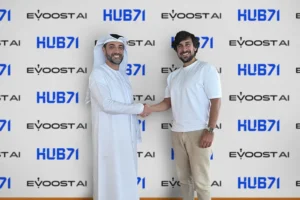
I told my fellow journalist how this startup had achieved something that only one other Spanish company (Bit2Me) had managed to do so far, and only two European companies this year. eVoost AI, a young company only a year and a half old, managed to enter Hub 71, one of the most promising innovation ecosystems in the world with the most innovative and strategic vision to lead the development of AI globally.
eVoost AI, the project that has Abu Dhabi hooked
eVoost AI mesmerized the bigwigs of the Emirate of Abu Dhabi with its proposal to sell real estate using a platform created to work 24 hours a day, seven days a week, using emotional artificial intelligence. Without replacing anyone, it uses machine learning and analysis tools to predict user behavior and analyze markets with surgical precision, providing AI agents capable of understanding exactly what the customer wants, how they want it, when they want it, and how much they are willing to pay, by ‘emotionally’ understanding their needs. and being able to generate tailored content in multiple formats so that users can make the most of their time and access what they want to see at any time of day, eVoost AI’s emotional AI platform generated in Hub 71 that something big could shake the foundations of an old-fashioned sector.
A pioneering idea and development that has nothing to do with AI having or going to have emotions, or that in the future none of us will see superintelligence replacing people because it is capable of being confused with biological intelligence, as Google scientist Ray Kurzweil says.
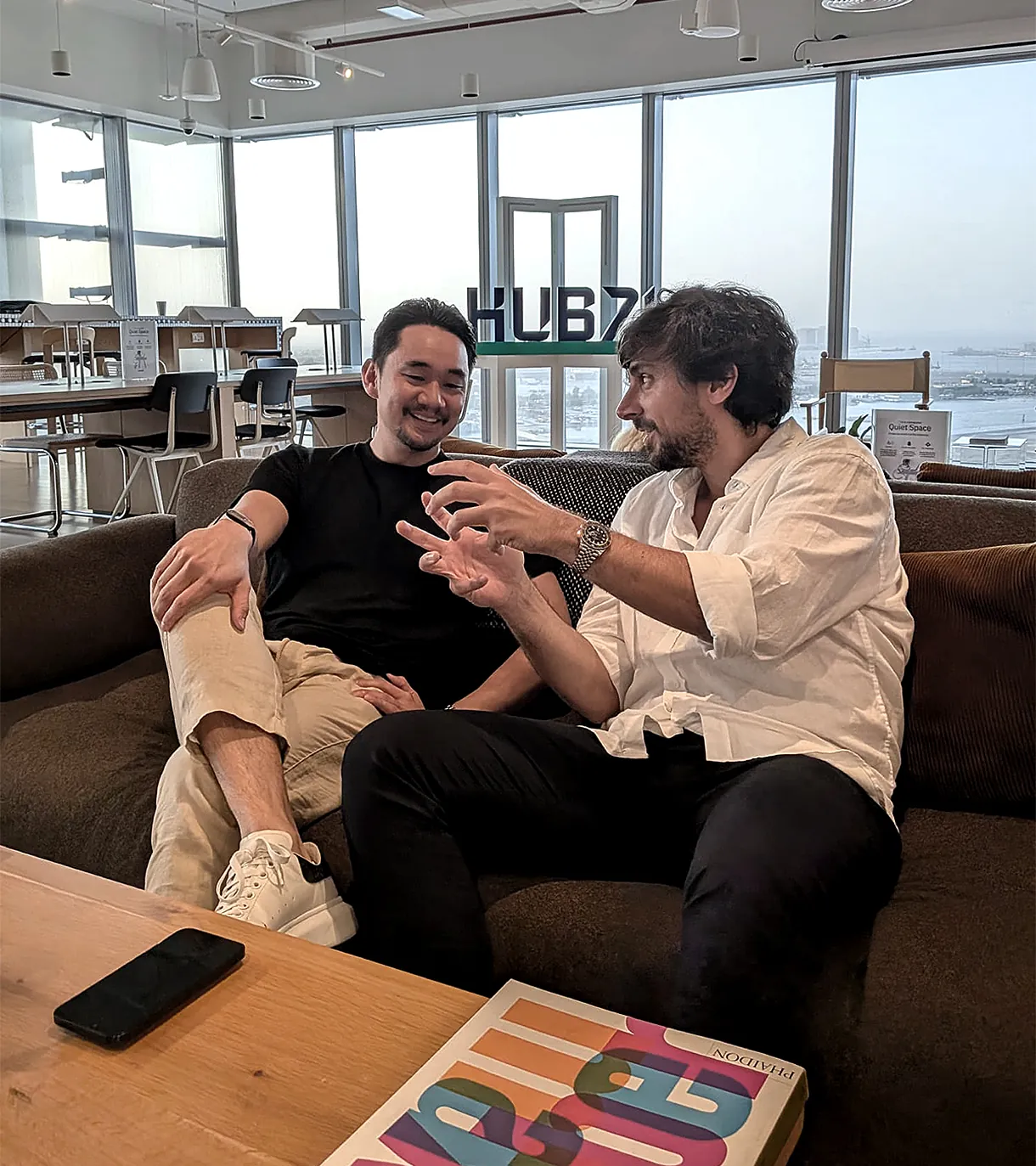
eVoost AI and its creators, a native of Gijón who wants to revolutionize and transform a sector stuck in the past using the latest advances in AI, and a Spanish-Filipino-Japanese entrepreneur who straddles the worlds of AI, crypto, and blockchain in the United Arab Emirates, Saudi Arabia, Japan, Spain, and anywhere else imaginable.
Cristian G. Pastrana and Koh Onozawa want to seize the moment and the technology, and tell the world that with the raw material that is already revolutionizing the world and their emotional AI, we can not only increase and multiply the possibilities of a business such as real estate and make it more transparent for all players in its ecosystem, but also give users the power they should really have to make the biggest investment of their lives: their home.